

Fall in Central Kentucky means cooler temperatures, changing leaves, football, pumpkin-spice everything and the beginning of the holiday season. It also means raking, cleaning gutters, moving outdoor furniture, putting away lawn equipment, and getting your home ready for winter.
Those weekend chores may not feel like a workout—but your back, neck, shoulders, and knees may disagree by Monday morning. Many fall cleanup projects involve repetitive movements, awkward positions, lifting, reaching, twisting, and climbing. Doing too much too quickly—or using poor body mechanics—can leave you with muscle strains, joint pain, stiffness, or more significant injuries.
At Landmark Chiropractic in Georgetown, Kentucky, we want you to enjoy the season, not spend it recovering from a weekend of yard work. Here are six common fall cleanup activities, the potential risks, and some simple ways to protect yourself.
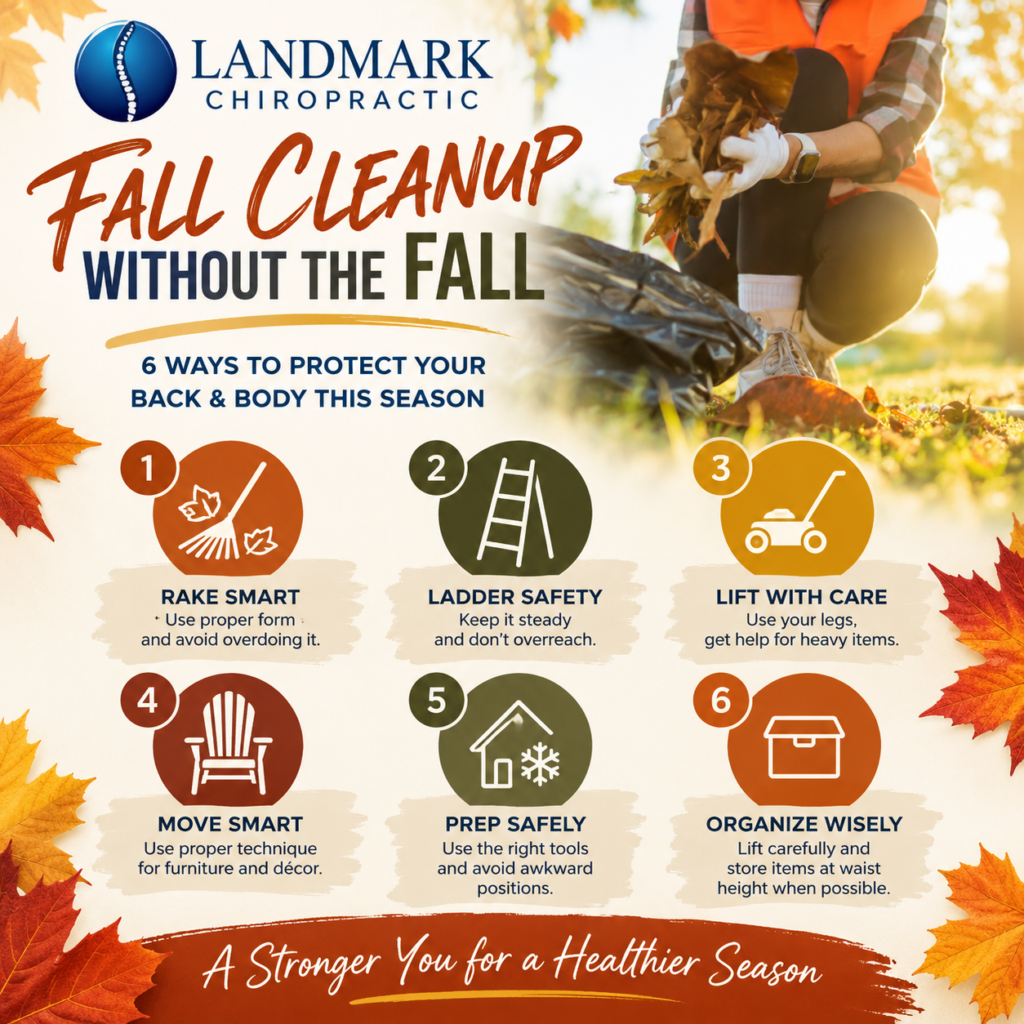
1. Raking and Bagging Leaves
Raking looks harmless, but it combines several movements that can put stress on your body: reaching, pulling, bending and twisting—over and over again. The risk increases when you rake a large yard in one afternoon and then repeatedly bend over to scoop up leaves and lift heavy bags.
- Protect yourself: Warm up before you begin, switch sides periodically instead of always raking from your dominant side, and move your feet rather than repeatedly twisting at the waist. When picking up leaves or bags, bend at your knees and hips and keep the load close to your body.
And remember: wet leaves are considerably heavier than dry ones. Don’t overload bags simply because there’s room left.
2. Cleaning Gutters and Climbing Ladders
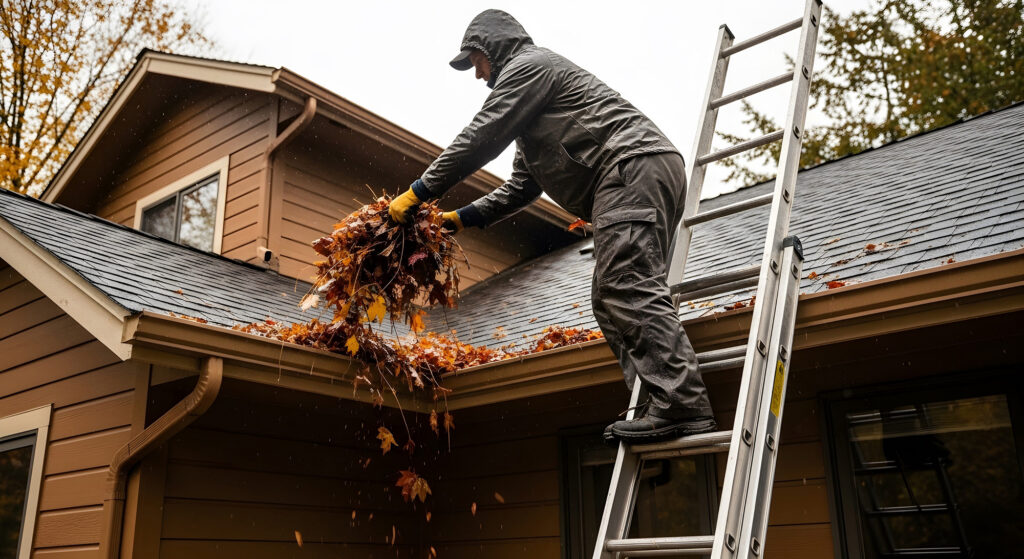
Gutter cleaning brings an entirely different concern: falls from ladders can cause serious injuries. Even without falling, repeatedly reaching sideways from a ladder can strain your shoulders and back or cause you to lose your balance. Moving the ladder takes more time, but it’s much safer than stretching to reach just one more section.
- Protect yourself: Use a sturdy ladder on firm, level ground and follow the manufacturer’s safety instructions. Have someone nearby when possible, maintain proper contact with the ladder, and climb down and reposition it rather than leaning or overreaching.
If you’re uncomfortable working at height, consider hiring a professional. Saving a few dollars isn’t worth risking a serious fall.
3. Putting Away Lawn Equipment
The mower, pressure washer, garden tools, hoses, planters and other outdoor equipment all have to go somewhere for winter, whether inside the shed, garage or basement. The problem often occurs when we’re trying to lift something heavy while simultaneously turning, carrying or squeezing it into a storage space.
- Protect yourself: Don’t guess whether you can lift something safely. Ask for help with heavy or awkward equipment. Clear your path first, use a cart or dolly when appropriate, and lift with your legs while keeping the object close to your body.
Avoid lifting and twisting at the same time, which increases the risk of injury. Turn your entire body by moving your feet and only lift when your body and feet are facing the same way.
4. Moving Patio Furniture and Outdoor Décor
Patio tables, grills, umbrellas and large planters can be deceptively heavy—and their size often makes them more difficult to carry safely. Dragging heavy furniture can also put unnecessary stress on your lower back, shoulders, wrists and knees.
- Protect yourself: Break furniture down into smaller components when possible. Get another person to help with large pieces and use moving equipment for particularly heavy items.
Don’t make the classic homeowner mistake: “I’ll just move it really quickly by myself.” A five-minute shortcut can turn into weeks of discomfort.
5. Winterizing Your Home

Fall home maintenance can mean changing filters, checking windows, inspecting weatherstripping, disconnecting hoses, covering outdoor faucets, checking the attic and reaching into places you haven’t thought about since last winter. That often means crawling, crouching, kneeling, reaching overhead and working in awkward positions.
- Protect yourself: Give yourself room to work whenever possible and avoid holding awkward positions for long periods. Use a proper step stool rather than standing on chairs or countertops. Take breaks, change positions frequently and use knee protection when kneeling.
Most importantly, don’t rush because you’re trying to finish your entire winter checklist in one afternoon. Instead, check items off your list one weekend at a time. It may take a bit longer but preventing injury or unnecessary strain on your body will take much longer to heal.
6. Cleaning the Garage, Basement or Storage Areas
Fall is often the time when summer equipment goes into storage and holiday decorations start coming out. Boxes that haven’t moved in a year can be surprisingly heavy. Reaching above your head for storage bins or lifting boxes from the floor can strain the back, neck and shoulders, especially when combined with twisting.
- Protect yourself: Store heavier items between approximately knee and shoulder height when possible. Use smaller containers rather than creating one extremely heavy box. Bring items close to your body before lifting and ask for help when something is bulky or difficult to grip.
Your Fall Cleanup Safety Checklist
A few good habits can make a big difference:
- Warm up first. A few minutes of walking and gentle movement can prepare your body for physical work.
- Pace yourself. Divide big projects over several days or weeks instead of tackling everything at once. Resting a few days in between can give your body time to heal before you tackle the next project.
- Lift intelligently. Bend at your hips and knees, keep loads close, and avoid twisting while carrying.
- Use the right equipment. Ladders, dollies, carts, gloves and appropriate footwear aren’t conveniences—they’re safety tools.
- Take breaks and stay hydrated. Cooler weather doesn’t mean your body isn’t working hard.
- Listen to your body. Sharp pain, increasing pain, weakness, numbness, tingling or significant loss of movement shouldn’t be ignored.
Already Feeling the Effects of Fall Cleanup?
Sometimes you do everything right and still wake up the next morning thinking, “What did I do to my back?” Other times, one awkward lift, slip, repetitive movement or afternoon spent raking can aggravate an existing problem.
If you’re experiencing back pain, neck pain, joint discomfort, muscle tightness, stiffness or reduced mobility, Landmark Chiropractic can evaluate what’s going on and recommend an appropriate course of care. Our Georgetown office offers chiropractic care and rehabilitation services, along with treatment approaches and modalities that can be tailored to the individual patient. See our new hours.
And if your fall cleanup involved an actual fall or significant injury, don’t simply assume it’s something that should be “worked out.” Depending on the symptoms and severity, urgent or emergency medical evaluation may be appropriate before chiropractic treatment.